วันพุธที่ 24 เมษายน พ.ศ. 2556

Main Instrument in Orchestra - Percussion

Hello! This is the last article about music instrument in orchestra - percussion.
Percussion are divided to two groups.

1. Definite pitch

1.1 Timpani or Kettledrums (call from its kettle-liked shape)

http://upload.wikimedia.org/wikipedia/commons/thumb/c/c2/Timpani_tuning.jpg/256px-Timpani_tuning.jpg

The most important percussion instrument. They are played by drum sticks. Often played in pair or more. (So they are called in plural Timpani instead of single Timpano) Timpani can be tuned to each key (C, D, E, etc.), so there is a score for timpani. They are used to be tuned by screws, which are around their face. Drummer had to tuned by their hand or taps. Nowadays timpani are tuned by a pedal that acts on a central screw. allowing drummer to change tonality while continuing to play with both hands. Kettledrums were developed during 14th and 15th century in Germany for military using.
This instrument mostly appears in orchestra.

1.2 Xylophone

http://upload.wikimedia.org/wikipedia/commons/thumb/f/fa/Berlin_Wurlitzer_Xylophone.jpg/256px-Berlin_Wurlitzer_Xylophone.jpg        http://upload.wikimedia.org/wikipedia/commons/thumb/7/7e/Xylophone_%28PSF%29.png/256px-Xylophone_%28PSF%29.png?uselang=th

It is made of woods. It came to Europe in 1860. First use in Camille Saint-Saëns' Danse Macabre. There are many versions of this instrument, depending to each nation. Example, Japanese version is mokkin. Thai version are ranad-ek and ranad-tum.

1.3 Glockenspiel

http://upload.wikimedia.org/wikipedia/commons/thumb/6/6e/Glockenspiel-malletech.jpg/256px-Glockenspiel-malletech.jpg

A little metal xylophone. There's a portable glockenspiel called bell-lyra.

1.4 Vibraphone


http://upload.wikimedia.org/wikipedia/commons/f/fb/Vibraphones.jpg

Similar to xylophone but metal-made and motor-driven valves installed in each bar with tubes called resonators.

1.5 Marimba
http://upload.wikimedia.org/wikipedia/commons/thumb/2/2d/Classical_Marimba_player.jpg/256px-Classical_Marimba_player.jpg

Lower-pitched xylophone. It has motor-driven valves installed in each bar with tubes called resonators. You have to play with four mallets. (But this picture above is an exception.)


Xylophone, vibraphone and marimba are also played in jazz music.

1.6 Tubular bell or Chimes


http://upload.wikimedia.org/wikipedia/commons/thumb/a/af/Berlin_Wurlitzer_Chimes.jpg/256px-Berlin_Wurlitzer_Chimes.jpg

Very big brass percussion. You have to play it with small mallets. Originated in South-east Asia.

1.7 Celesta

http://upload.wikimedia.org/wikipedia/commons/thumb/2/28/Celesta_Schiedmayer_MIM_1592.jpg/256px-Celesta_Schiedmayer_MIM_1592.jpg

Its shape is similar to upright piano. Sound similar to glockenspiel.

2. Undefinite pitch

2.1 Bass drum


http://upload.wikimedia.org/wikipedia/commons/thumb/6/68/Britannica_Drum_Military_Bass_Drum.jpg/128px-Britannica_Drum_Military_Bass_Drum.jpg?uselang=th

2.2 Side drum or  Snare drum


http://upload.wikimedia.org/wikipedia/commons/2/20/Britannica_Drum_Regulation_Side_Drum.jpg

These drums mentioned above are used in military band many times and also equipped in drum set.

2.3 Triangle - called by its shape.

http://upload.wikimedia.org/wikipedia/commons/thumb/6/6d/Modern-Triangle.jpg/256px-Modern-Triangle.jpg

2.4 Cymbals- very interesting brass percussion. Also equipped in drum set. They were known in ancient Israel, but forgotten until the introduction of "Turkish" music in 18th century. There are many versions of cymbals. Thai version is ching and chab.
Trivia: Cymbals are mostly produced in Turkish company, Zidjian.

http://upload.wikimedia.org/wikipedia/commons/thumb/2/25/Cymbals_%28PSF%29.png/256px-Cymbals_%28PSF%29.png

This is all of this article, see you next time!

Note: These pictures are public domain.

วันพฤหัสบดีที่ 4 เมษายน พ.ศ. 2556

Für Elise

Now this article is about very famous piano song student have to start training from - Für Elise, which is composed by Ludwig van Beethoven (1770-1827).


Für Elise opening score (Public domain)

The real name of this song is Bagatelle No. 25 (WoO* 59) (Bagatelle is a short piece of music, typically for piano) in A minor. This song is well-known because repeating and easy playing melody. It is applied to many songs such as pop, rock, etc.

The score was not published until 1867, 47 years after Beethoven's death.
Nobody certainly knows that who was "Elise" Beethoven referred to, nor why he wrote this song. Many scholars supposed that the song name is published incorrectly and it may refer to Therese Malfatti, Beethoven's friend and student.

* WoO - Werke ohne Opuszahl (In English: Work without opus number). Used in Beethoven's compositions that were not published with an opus number) 


วันพุธที่ 27 มีนาคม พ.ศ. 2556

Main Instrument in Orchestra - Keyboards

Hello! Another orchestral instrument article - now is keyboards.

Keyboards

1. Piano (Klavier in German, Pianoforte in Italian) - The most important instrument in orchestra.

http://upload.wikimedia.org/wikipedia/commons/thumb/0/0a/Britannica_Pianoforte_Steinway_Grand_Piano.png/128px-Britannica_Pianoforte_Steinway_Grand_Piano.png

Top view of piano

http://upload.wikimedia.org/wikipedia/commons/thumb/2/2c/Britannica_Pianoforte_Silbermann_Forte_Piano.png/256px-Britannica_Pianoforte_Silbermann_Forte_Piano.png

Side view

It invented around 1709 by Bartolomeo Cristofori (1655-1731), a harpsichord builder and keeper of the royal musical instruments in Florence. He developed it from harpsichord. However it wasn't popular until 18th century, along with better building techinques. It got this name because pianist can control dynamic by stamping on pedals. (Piano means "soft, quiet" and Forte means "strong, loud, hard" in Italian.)
There are two kinds of piano - grand piano (Also divided to grand and a smaller baby grand.) and vertical upright piano. A grand is good for concert while an upright is suit for practice, also save a lot of house space.
Almost of pianos have 52 white keys and 36 black keys for a total of 88 keys.
Each piano has three pedals:
(1) Una Corda or Soft pedal. It's on the left side on piano. When you stamp on this pedal, it makes hammers move left (in concert piano) or move closer to strings (in upright) struck only one string for each note, so a note is softer.
(2) Sostenuto pedal. It's on the middle on paino. When you use this pedal, you can sustain selected notes, while other notes uneffected. This pedal is rarely found in European made piano because it is not popular.
(3) Sustaining pedal, the right side on piano. "Sustains" all keys by move the dampers (which are on strings) away from the strings.
Piano is not played in symphony.

2. Harpsichord - Very old keyboard instrument. Shape like piano but, to compare them, piano is string striking hammer harpsichord, while harpsichord is string plucking piano.


http://upload.wikimedia.org/wikipedia/commons/thumb/5/5f/Harpsichord_%28PSF%29.png/256px-Harpsichord_%28PSF%29.png


You cannot control volume of this instrument but it has two manual for acoustic quality, the lower one is loud choir, while the upper is soft choir.
Very popular in Baroque era but decline in 18th century. However, it made a resurgence in 20th century and still be played for Baroque music nowadays.

3. Organ -  The oldest key board instrument. Imagine that you play piano connected with big and long pipe. It uses wind moving through pipes to make sound. Its sound is suitable for playing alone, without any instrument.

http://upload.wikimedia.org/wikipedia/commons/thumb/3/38/Godthaabskirken_Copenhagen_organ.jpg/256px-Godthaabskirken_Copenhagen_organ.jpg

It is supposed that it devised in Alexandria in the 3rd century BC.
Organs are roughly divided to:
(1) Pipe organ - church organ (see above picture) and theater organ for examples.

http://upload.wikimedia.org/wikipedia/commons/thumb/c/cf/LincolnTheatreWurlitzerConsole.jpg/256px-LincolnTheatreWurlitzerConsole.jpg

(2) Reed organ or pump organ

http://upload.wikimedia.org/wikipedia/commons/7/76/Magnus_890_electric_chord_organ.JPG?uselang=th

The most-known organ song is Bach's Toccata and Fugue in D minor, as I said in article of Bach's biography.

Musician's Biography No. 1 - Johann Sebastian Bach 

Note: "Organ' Symphony (Symphony No. 3 in C minor), composed by Camille Saint-Saëns, using organ in second movement, though it is not really song for organ.

I have to tell you that I will pick only widely played instrument in orchestra, to make content simple.

The end. See you later in next article!

Note: These pictures are public domain.

วันพฤหัสบดีที่ 21 มีนาคม พ.ศ. 2556

Musician's Biography No. 1 - Johann Sebastian Bach

Hello again! Now this article is about musicians and artists's biography. The first one I'm going to introduce is Johann Sebastian Bach, the well-known Baroque composer.


Pictures of Bach by Elias Gottlob Haussman, 1748.

Johann Sebastian Bach (1685-1750) born in Eisenach (in the modern-day Thuringia), Germany, in court chamber musician family. He was also known as organist. He wrote many famous sacred musics, organ, keyboards and orchestral works like the Well-Tempered Clavier, Brandenburg Concertos, etc. After his death, his music was old-fashioned and forgot together with the end of the Baroque Era until Felix Mendelssohn revived Bach's reputation.
About his personality, he was stubborn and strongly believed in the God (He was Lutheran), so he composed a lot of scared songs like cantatas, etc.
Bach's works is widely known by his brilliant melody, music style and techniques,so the works are influence to many musicians in further period, include Rock, Jazz and Pop musics.


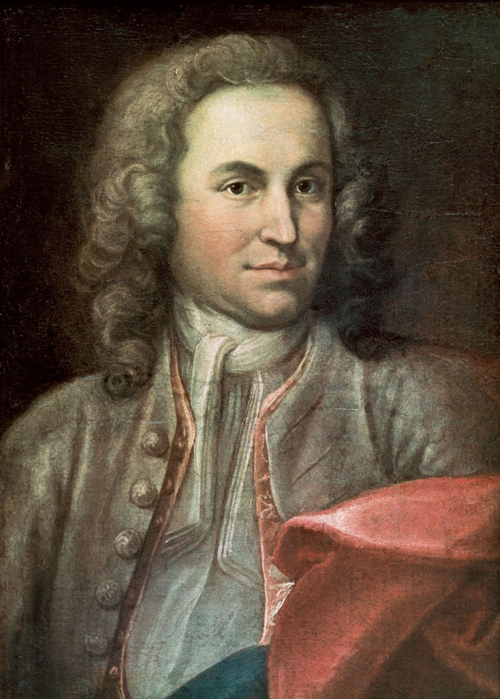
This is young Bach picture by J. E. Rentsch, the Elder, 1715.

List of Bach's famous works:
- Brandenburg Concertos (BWV* 1046-1051), concertos Bach presented to Margrave** of Brandenburg.
- The Well-Tempered Clavier (BWV 846-893), contains 24 preludes and fugues.
- Toccata and Fugue in D minor (BWV 565), the most famous Bach's work.
- Coffee Cantata (BWV 211)
- Mass in B minor (BWV 232)
- The Art of Fugue (BWV 1080), an unfinished fugal work.

If you have any comment, please feel free to leave it on this blog.

* BWV - Bach-Werke-Verzeichnis - Bach Works Catalogue
**Margrave - a mediaval title of the military commander for maintaining the defense in the border provinces of the Holy Roman Empire. 

http://astore.amazon.com/classical-music-newbies-20

วันเสาร์ที่ 16 มีนาคม พ.ศ. 2556

Main Instruments in Orchestra-Brasswinds


Hello again! Here is an article about instruments in orchestra again. Now this one is about...

Brasswinds

1.Horn (Also known as corno and French horn) Very old valved brass instrument. It has this name because it evolved from animal horns, which human used in ancient time. It has a curve shape since 17th century and has valves since 1815. Trivia: Mozart wrote four notable horn concertos.


http://upload.wikimedia.org/wikipedia/commons/2/24/Britannica_Horn_Modern_Horn.png

2. Trumpet - Another very old valved instrument. It also used very often in military band, jazz music, etc.

http://upload.wikimedia.org/wikipedia/commons/thumb/7/73/Britannica_Trumpet_Proteano_Trumpet.png/256px-Britannica_Trumpet_Proteano_Trumpet.png

3. Trombone - Telescopic slide instrument, often used in jazz and military band, like trumpet.

http://upload.wikimedia.org/wikipedia/commons/thumb/9/94/Britannica_Trombone_Tenor.png/256px-Britannica_Trombone_Tenor.png

4. Tuba- A very big and deep-pitched instrument. The "Bass" of brass instrument.

http://upload.wikimedia.org/wikipedia/commons/thumb/6/6c/WIENER_TUBA_KAWAI_KFB-750L%28made_by_Musica%29.jpg/128px-WIENER_TUBA_KAWAI_KFB-750L%28made_by_Musica%29.jpg

5. Cornet- its shape is similar to trumpet but shorter shape and higher pitch.

http://www.wpclipart.com/music/instruments/other_horns/Cornet.jpg

6. Euphonium - a "Tenor" tuba. It sometimes is play instead of tuba. Mainly found in military band.

http://upload.wikimedia.org/wikipedia/commons/thumb/4/4a/Euphonium.jpg/128px-Euphonium.jpg

7. Flugelhorn - Another valved brasswind. Its sound is "fatter" and "darker" than trumpet and cornet.

http://www.wpclipart.com/music/instruments/other_horns/Flugelhorn.jpg

This kind of instruments are often used in military band.
This is all of this article. See you in next article.

Note: These pictures are public domain.

วันศุกร์ที่ 8 มีนาคม พ.ศ. 2556

Main Music Instruments in Orchestra-Woodwinds


Hello! I'm Nat. Let's continue from last article. Now this article is about...

Woodwinds

1. Flute - included in woodwinds instrument although it is made from metal, because it was made from wood before. An very old instrument.

http://upload.wikimedia.org/wikipedia/commons/thumb/4/4c/Flickr_-_The_U.S._Army_-_34th_Red_Bull_Infantry_Division_Band.jpg/256px-Flickr_-_The_U.S._Army_-_34th_Red_Bull_Infantry_Division_Band.jpg

This photo is from U.S. Navy. Public domain.

2. Piccolo - its shape is like flute but smaller and has higher pitch.

http://upload.wikimedia.org/wikipedia/commons/thumb/b/b6/Piccolo.jpg/256px-Piccolo.jpg?uselang=th

3. Oboe - A very-hard-to-play instrument. Double-reed woodwind. It has sweet and lamentably sound.

http://upload.wikimedia.org/wikipedia/commons/thumb/6/6f/Britannica_Oboe.jpg/16px-Britannica_Oboe.jpg

4. Cor Anglais or English Horn (Neither related to English nor the horn) - its shape is similar to oboe but deeper sound and lower pitch.

http://upload.wikimedia.org/wikipedia/commons/thumb/2/22/Englischhorn_horizontal.jpg/256px-Englischhorn_horizontal.jpg

5. Bassoon (Many countries don't call this name.) -  Very big instrument. It has very low and funny pitch so it is called "The clown of orchestra". There is a bassoon's relative instrument called Contrabassoon or Double bassoon. It is larger than bassoon.

http://upload.wikimedia.org/wikipedia/commons/thumb/a/a0/Bassoon_1.png/64px-Bassoon_1.png

6. Clarinet - Another important instrument. Single-reed woodwind. There are many keys of clarinet like A-flat, B-flat, E-flat, etc.

http://upload.wikimedia.org/wikipedia/commons/thumb/a/a9/Britannica_Clarinet_Boehm.jpg/32px-Britannica_Clarinet_Boehm.jpg

 7. Recorder - whistle-like woodwinds. It has been popular in Baroque era. Now it is known as child's instrument. Recorder, however, is played in Baroque era songs sometimes.

http://upload.wikimedia.org/wikipedia/commons/1/10/Recorder.jpg

In fact there is another woodwind instrument, that is saxophone. But I think I'll tell you about it later because this instrument merely played in orchestra due to its loud, unique sound. Also, an important reason is saxophone has too long story to post here.
End of this article. Bye for now!

Note: These pictures are public domain.

วันอาทิตย์ที่ 3 มีนาคม พ.ศ. 2556

Main Music Instruments in Orchestra-Strings


Hello again! Here’s an article about guiding to classical music, now it’s main music instruments in orchestra. First, I’ll introduce string instruments first. They are divided to two groups.
Bowed string instruments
1. Violin – Main character of orchestra. The smallest string instrument.
http://upload.wikimedia.org/wikipedia/commons/thumb/b/bb/VIOLIN.JPG/128px-VIOLIN.JPG
2. Viola - its shape is like violin but a little bigger and has a deeper sound.
http://upload.wikimedia.org/wikipedia/commons/thumb/c/cd/Bratsche.jpg/128px-Bratsche.jpg
3. Cello (Some countries call its full name-Violoncello) - a big string instrument. Sometimes it is played in jazz, blues and some pop songs.
http://www.wpclipart.com/music/instruments/cello/cello_5.jpg
4. Double bass (Many countries call Contrabass) - the biggest string instrument. You have to stand to play it. Very often played in jazz.
http://upload.wikimedia.org/wikipedia/commons/4/4a/Octobass_and_double_bass.jpg
The left string instrument is double bass, the right one is cello.
These string instruments are called “Violin family instruments”, very,very  important in orchestra.
Plucked string instruments
Harp – very old instrument, played in some song. Its sound is similar to piano but brighter.
http://upload.wikimedia.org/wikipedia/commons/4/4e/Harp.png
In fact I want to post article about guitar because it is also string instrument, but there are many kinds of guitar so I have to separate it and tell you about them later.
End of this article, Next article will be woodwind instruments.
Note: These photos are public domain.
Sunday Morning with Bach

วันพฤหัสบดีที่ 28 กุมภาพันธ์ พ.ศ. 2556

Welcome to Natatnote’s Music Talk Blog


Hello! My name is Nat. This blog is opened to give an area for talking about music, especially classical music.
The first article for this blog is about period of classical music for you who begin listening or are interested to classical music.
1. Medieval or Middle Age (500-1400 A.D.) Begins from the fall of the Roman Empire. There were many chant songs. Very good examples are gregorian chants.
2. Renaissance (1400-1600) More various music instruments, but songs were still connected to religion.
3. Baroque (1600-1750) Music elements in this period were more complicated. Johann Sebastian Bach (1685-1750) is very good example of composers in Baroque. Please notice that if an orchestra plays Baroque song, you can hear a slightly sound of harpsichord (a keyboard instrument).
4. Classic (1750-1820) Very absolute music, not so much expressions. Simple patterns. Famous composers we should know are Mozart, Haydn, etc.
5. Romantic (Approximately 1800-1900) Many composers’ expressions in their songs. Well-known composers are Beethoven, Schubert, Chopin, Wagner, etc.
6. Impressionism (1875-1925), led by French composer Claude Debussy. Many whole-tone scale songs.
7. Modernism (1890-1930) Various groups in this era like Expressionism, Neo-Classicism, etc.
8. 20th Century (1901-2000)
9. 21th Century (2001-Present) Both 8. and 9. are more tough to listen.