วันศุกร์ที่ 14 มิถุนายน พ.ศ. 2556

Chamber Music

Hello! Welcome to nat@note's Music Blog. This article is about Chamber music.
This kind of music is scored for small group of instruments from two to ten instruments, which traditionally could fit a palace chamber. Mostly three to five movements.
Sometimes sonata is included to chamber music because it have one or two instruments but sometimes not because sonata provides only performance of solo instrument.
This kind of music is born since late Baroque, supposed that it originated from sonata in that period. Later, it was developed and went to the peak in Classical. (See Sonata in my blog)

http://upload.wikimedia.org/wikipedia/commons/thumb/5/59/KneiselQuartet.jpg/512px-KneiselQuartet.jpg?uselang=th

String Quartet is an example of chamber music ensemble.

Ensembles
1. Duo or Duet - for two instruments. Example: Piano Duet.
2. Trio - for three instruments. Example: Piano Trio, consists of piano, violin and cello.
3. Quartet - for four. Example: String Quartet, the well-known ensemble. Consists of two violins, viola and cello.
4. Quintet - for five. Example: Piano Quintet. (See Recommended songs)
5. Sextet - for six.
6. Septet - for seven.
7. Octet - for eight.
8. Nonet - for nine.
9. Decet - for ten.

Recommended songs
Piano Quinter in A major, D. 667 by Schubert - known as Trout Quintet. This song is scored for violin, viola, cello and double bass. It got this name because there is a set of theme and variations in the fourth movement on Schubert's earlier Lied* "Die Forelle" (The Trout). Five movements in this song.

* A kind of vocal song, arranged for single singer and piano.

วันจันทร์ที่ 10 มิถุนายน พ.ศ. 2556

Sonata

Hello! Now this article is about a kind of classical song called sonata.
Sonata has two usages: 1. The most common genre are piano solo or solo instrument, such as violin or cello, accompanied with piano. This meaning began since Classical period. 2. Baroque sonata - I'll tell about this kind of this sonata in its history.
Piano is very impressive instrument: it can be played alone so that it doesn't need other instruments to accompany. This explains why violin and others instrument should be accompanied with piano. Because their sound is not impressing so much as piano.

Forms
1. First movement - Generally sonata form.
2. Second movement - Slow movement.
3. Third movement - Dance rhythm.
4. Final movement - Sonata or Rondo form.
Three-movement sonatas have not the third movement. However, most sonatas have three movements, like all concertos. I think because music contents of sonatas are not much as symphonies.

History
This word originated from Latin and Italian word sonare, means to sound or to played, to distinguished from vocal song, cantata (means to sing).
To be specific: Symphony is "sonata" for orchestra and concerto is "sonata" for solo instrument and orchestra.
In the early Baroque, sonata had very wide meaning: it was also applied for a variety of works for solo instrument such as keyboards, violin ,etc. and for group of instruments. No definite number of movements or music form.
Sonatas in Baroque were also divided to two kind: 1. Church Sonata - focusing on contrapunctal texture, had four movements: Slow-fast-slow-fast. 2. Chamber Sonata - had minuet song.
Until the middle of Baroque, the meaning of sonata we know happened: there was a definite number of instruments and music movements. Arcangelo Corelli, an Italian musician and composer, developed sonata for three instrument called trio sonata, which was very popular in that time. Also, duo sonata, sonata for two instruments, was also popular too.
An example of Baroque sonata is Violin sonata in G minor by Giuseppe Tartini, known as Devil's Trill Sonata.
Composers who wrote many sonatas are Haydn, Mozart and Beethoven. In Romantic period, sonata was still popular until 20th century.

Recommended sonatas
Piano Sonata No. 8 in C minor, Op. 13 "Pathetique" by Beethoven The second movement is very famous that it is applied in modern music.
Piano Sonata No.14 in C-sharp minor, Op. 27 No. 2 by Beethoven The very famous Beethoven's sonata, especially the first movement. I'll detail this song later.
Piano Sonata No. 11 in A major, K.331(300i in the second Kochel's catalogue) by Mozart The last movement, popularly known as "Turkish Rondo", is often listened and is the one of Mozart's best known piano piece.

วันจันทร์ที่ 3 มิถุนายน พ.ศ. 2556

Concerto

Hello! This article is about concerto.
Concerto is a musical composition which one (or more) solo instrument(s) accompanied by orchestra.

Kind of concertos
1. Concerto grosso consists of two instrumental groups: orchestra, called tutti and solo instruments. No definite forms but mostly in ritonello form. In this form, orchestra and solo instruments group play alternatively.
2. Solo concerto is the form of concerto we understand. Sometimes it is called classic concerto because it became popular since Classic era. It scores a solo instrument and orchestra. More definite music form and movements.

Form
1. First movement in Sonata form, fast tempo. Most of concertos have solo-part called cadenza. This part orchestra stop, solo instrument plays with his techniques and abilities. No scores written in cadenza in classical concertos in order to make solo instrument play by improvisation. Later concertos have scored cadenza.
2. Second movement Slow Tempo
3. Last Movement
All concertos have three movements because if concertos have four or more movements, the musician and orchestra would be exhausted, also, concertos originally have three movements since Baroque era, which they originated.

History
History of concertos started form Baroque with "competition" between solo instrument and orchestra. The first kind of concerto, concerto grosso, started in this era. Later in Classic era solo concerto was popular since then. Any instrument can be scored in concerto but piano and violin are mostly scored.

Recommended concertos
The Four Seasons by Antonio Vivaldi - Four concerto grossos, consists of La Primavera (Spring), L 'estate (Summer), L 'autunno (Autumn) and L 'inverno (Winter). Violins are solo group.
Piano Concerto No.5 in E-flat major, Op. 73 "Emperor" by Beethoven
Brandenburg Concerto by Bach

วันพุธที่ 22 พฤษภาคม พ.ศ. 2556

Symphony

I'm very sorry for my long absent because I had a long holiday trip.
This article is about symphony and its history.

http://upload.wikimedia.org/wikipedia/commons/f/f1/Beethoven_symphony_5_opening.png
The opening of Symphony No.5 in C minor, Op. 67 by Beethoven

A symphony is a very large musical composition in classical music, scored all kinds of instruments in orchestra and has at least one movement or more.

Form
1. First movement Always scored in fast tempo called in Italian Allegro. Some symphonies have introduction. Composed in sonata form.
2. Second movement Slow tempo.
3. Third movement Dance rhythm minuet. (in triple time such as 3/4) , traditional dances, or funny rhythm scherzo.
4. Fourth movement Sonata or rondo form.
Most symphonies have four movements. However, depending to composers, not all of symphonies accord to the form mentioned above, especially in Romantic period, which many composers expressed their feelings and emotions to songs. Example: Sibelius' Symphony No.7 has only one movement. Beethoven's Symphony No.6 "Pastoral" has five movements.

http://upload.wikimedia.org/wikipedia/commons/thumb/a/a8/Symfonieorkest_Bellitoni.jpg/512px-Symfonieorkest_Bellitoni.jpg

Origin
The word symphony is derived from the greek word symphonia, meaning "concord of sound". Many musicians from Renaissance through Baroque tried to developed this kind of song. They wrote symphonies by use forms of Italian-style opera overtures: fast-slow-fast. After it became popular, composers wrote overture-like form symphonies.
The instrument arrangement weren't definite until Classical period, led by Joseph Haydn, "Father of Symphonies". He developed and composed 104 symphonies. These symphonies was highly developed in the Classical.
After that, many composers like Beethoven often wrote and developed classical symphonies such as using scherzo as the third movement instead of minuet, adding instruments, and moreover, he added chorus part in the last movement of his ninth and last symphony.
Then, many Romantic composers composed very long, expressionism, and hard-to-listen symphonies, specially Mahler's. That because instruments' technologies were developed so much that composers can write very complicated symphonies. Also it depends to time or history, especially in Romantic period that composers to write songs with their feelings and ideas.

Recommended songs
Symphony No.5 in C minor, Op. 67 by Beethoven - very famous symphony in the world.
Symphony No.40 in G minor, K.550 by Mozart


วันพฤหัสบดีที่ 2 พฤษภาคม พ.ศ. 2556

Calling name of classical songs

Hello! I'm going to introduce how to call name of classical songs.
A name consists of :
1. A kind of the song and its number like symphony, concerto, etc., following by the number of the song composer assigned.
2. Scale - Example: C major, C minor, etc.  Necessary for orchestra for which key they have to play.
3. Catalogue number Mostly use Opus, abbreviated to Op. Assigned by order of publishing. Also, in each publishing, if there are many compositions to publish together, another number will be added after opus number. This number helps you to discriminate compositions because there maybe a song has another one which has the same name.
However, some composers didn't assigned opus number, especially Baroque and Classical composers. Example: Mozart's compositions are assigned to KV, Kochel-Verzeichnis, named after Ludwig von Kochel, who made Mozart's songs catalogue.
4. Name of composer

Example
- Symphony No.5 in C minor, Op. 67 by Beethoven
- Piano Concerto No. 21 in C major,  KV. 467 by Mozart
- Prelude in E minor, Op. 28 No.4 by Chopin Notice that many preludes in Op.28, so it has another number after opus number.
Some compositions have specific name, so you can call the kind of name of the song, too. Example: Symphony No.6 in F major, Op. 68 "Pastoral" by Beethoven or Pastoral Symphony by Beethoven.

วันพุธที่ 24 เมษายน พ.ศ. 2556

Main Instrument in Orchestra - Percussion

Hello! This is the last article about music instrument in orchestra - percussion.
Percussion are divided to two groups.

1. Definite pitch

1.1 Timpani or Kettledrums (call from its kettle-liked shape)

http://upload.wikimedia.org/wikipedia/commons/thumb/c/c2/Timpani_tuning.jpg/256px-Timpani_tuning.jpg

The most important percussion instrument. They are played by drum sticks. Often played in pair or more. (So they are called in plural Timpani instead of single Timpano) Timpani can be tuned to each key (C, D, E, etc.), so there is a score for timpani. They are used to be tuned by screws, which are around their face. Drummer had to tuned by their hand or taps. Nowadays timpani are tuned by a pedal that acts on a central screw. allowing drummer to change tonality while continuing to play with both hands. Kettledrums were developed during 14th and 15th century in Germany for military using.
This instrument mostly appears in orchestra.

1.2 Xylophone

http://upload.wikimedia.org/wikipedia/commons/thumb/f/fa/Berlin_Wurlitzer_Xylophone.jpg/256px-Berlin_Wurlitzer_Xylophone.jpg        http://upload.wikimedia.org/wikipedia/commons/thumb/7/7e/Xylophone_%28PSF%29.png/256px-Xylophone_%28PSF%29.png?uselang=th

It is made of woods. It came to Europe in 1860. First use in Camille Saint-Saëns' Danse Macabre. There are many versions of this instrument, depending to each nation. Example, Japanese version is mokkin. Thai version are ranad-ek and ranad-tum.

1.3 Glockenspiel

http://upload.wikimedia.org/wikipedia/commons/thumb/6/6e/Glockenspiel-malletech.jpg/256px-Glockenspiel-malletech.jpg

A little metal xylophone. There's a portable glockenspiel called bell-lyra.

1.4 Vibraphone


http://upload.wikimedia.org/wikipedia/commons/f/fb/Vibraphones.jpg

Similar to xylophone but metal-made and motor-driven valves installed in each bar with tubes called resonators.

1.5 Marimba
http://upload.wikimedia.org/wikipedia/commons/thumb/2/2d/Classical_Marimba_player.jpg/256px-Classical_Marimba_player.jpg

Lower-pitched xylophone. It has motor-driven valves installed in each bar with tubes called resonators. You have to play with four mallets. (But this picture above is an exception.)


Xylophone, vibraphone and marimba are also played in jazz music.

1.6 Tubular bell or Chimes


http://upload.wikimedia.org/wikipedia/commons/thumb/a/af/Berlin_Wurlitzer_Chimes.jpg/256px-Berlin_Wurlitzer_Chimes.jpg

Very big brass percussion. You have to play it with small mallets. Originated in South-east Asia.

1.7 Celesta

http://upload.wikimedia.org/wikipedia/commons/thumb/2/28/Celesta_Schiedmayer_MIM_1592.jpg/256px-Celesta_Schiedmayer_MIM_1592.jpg

Its shape is similar to upright piano. Sound similar to glockenspiel.

2. Undefinite pitch

2.1 Bass drum


http://upload.wikimedia.org/wikipedia/commons/thumb/6/68/Britannica_Drum_Military_Bass_Drum.jpg/128px-Britannica_Drum_Military_Bass_Drum.jpg?uselang=th

2.2 Side drum or  Snare drum


http://upload.wikimedia.org/wikipedia/commons/2/20/Britannica_Drum_Regulation_Side_Drum.jpg

These drums mentioned above are used in military band many times and also equipped in drum set.

2.3 Triangle - called by its shape.

http://upload.wikimedia.org/wikipedia/commons/thumb/6/6d/Modern-Triangle.jpg/256px-Modern-Triangle.jpg

2.4 Cymbals- very interesting brass percussion. Also equipped in drum set. They were known in ancient Israel, but forgotten until the introduction of "Turkish" music in 18th century. There are many versions of cymbals. Thai version is ching and chab.
Trivia: Cymbals are mostly produced in Turkish company, Zidjian.

http://upload.wikimedia.org/wikipedia/commons/thumb/2/25/Cymbals_%28PSF%29.png/256px-Cymbals_%28PSF%29.png

This is all of this article, see you next time!

Note: These pictures are public domain.

วันพฤหัสบดีที่ 4 เมษายน พ.ศ. 2556

Für Elise

Now this article is about very famous piano song student have to start training from - Für Elise, which is composed by Ludwig van Beethoven (1770-1827).


Für Elise opening score (Public domain)

The real name of this song is Bagatelle No. 25 (WoO* 59) (Bagatelle is a short piece of music, typically for piano) in A minor. This song is well-known because repeating and easy playing melody. It is applied to many songs such as pop, rock, etc.

The score was not published until 1867, 47 years after Beethoven's death.
Nobody certainly knows that who was "Elise" Beethoven referred to, nor why he wrote this song. Many scholars supposed that the song name is published incorrectly and it may refer to Therese Malfatti, Beethoven's friend and student.

* WoO - Werke ohne Opuszahl (In English: Work without opus number). Used in Beethoven's compositions that were not published with an opus number) 


วันพุธที่ 27 มีนาคม พ.ศ. 2556

Main Instrument in Orchestra - Keyboards

Hello! Another orchestral instrument article - now is keyboards.

Keyboards

1. Piano (Klavier in German, Pianoforte in Italian) - The most important instrument in orchestra.

http://upload.wikimedia.org/wikipedia/commons/thumb/0/0a/Britannica_Pianoforte_Steinway_Grand_Piano.png/128px-Britannica_Pianoforte_Steinway_Grand_Piano.png

Top view of piano

http://upload.wikimedia.org/wikipedia/commons/thumb/2/2c/Britannica_Pianoforte_Silbermann_Forte_Piano.png/256px-Britannica_Pianoforte_Silbermann_Forte_Piano.png

Side view

It invented around 1709 by Bartolomeo Cristofori (1655-1731), a harpsichord builder and keeper of the royal musical instruments in Florence. He developed it from harpsichord. However it wasn't popular until 18th century, along with better building techinques. It got this name because pianist can control dynamic by stamping on pedals. (Piano means "soft, quiet" and Forte means "strong, loud, hard" in Italian.)
There are two kinds of piano - grand piano (Also divided to grand and a smaller baby grand.) and vertical upright piano. A grand is good for concert while an upright is suit for practice, also save a lot of house space.
Almost of pianos have 52 white keys and 36 black keys for a total of 88 keys.
Each piano has three pedals:
(1) Una Corda or Soft pedal. It's on the left side on piano. When you stamp on this pedal, it makes hammers move left (in concert piano) or move closer to strings (in upright) struck only one string for each note, so a note is softer.
(2) Sostenuto pedal. It's on the middle on paino. When you use this pedal, you can sustain selected notes, while other notes uneffected. This pedal is rarely found in European made piano because it is not popular.
(3) Sustaining pedal, the right side on piano. "Sustains" all keys by move the dampers (which are on strings) away from the strings.
Piano is not played in symphony.

2. Harpsichord - Very old keyboard instrument. Shape like piano but, to compare them, piano is string striking hammer harpsichord, while harpsichord is string plucking piano.


http://upload.wikimedia.org/wikipedia/commons/thumb/5/5f/Harpsichord_%28PSF%29.png/256px-Harpsichord_%28PSF%29.png


You cannot control volume of this instrument but it has two manual for acoustic quality, the lower one is loud choir, while the upper is soft choir.
Very popular in Baroque era but decline in 18th century. However, it made a resurgence in 20th century and still be played for Baroque music nowadays.

3. Organ -  The oldest key board instrument. Imagine that you play piano connected with big and long pipe. It uses wind moving through pipes to make sound. Its sound is suitable for playing alone, without any instrument.

http://upload.wikimedia.org/wikipedia/commons/thumb/3/38/Godthaabskirken_Copenhagen_organ.jpg/256px-Godthaabskirken_Copenhagen_organ.jpg

It is supposed that it devised in Alexandria in the 3rd century BC.
Organs are roughly divided to:
(1) Pipe organ - church organ (see above picture) and theater organ for examples.

http://upload.wikimedia.org/wikipedia/commons/thumb/c/cf/LincolnTheatreWurlitzerConsole.jpg/256px-LincolnTheatreWurlitzerConsole.jpg

(2) Reed organ or pump organ

http://upload.wikimedia.org/wikipedia/commons/7/76/Magnus_890_electric_chord_organ.JPG?uselang=th

The most-known organ song is Bach's Toccata and Fugue in D minor, as I said in article of Bach's biography.

Musician's Biography No. 1 - Johann Sebastian Bach 

Note: "Organ' Symphony (Symphony No. 3 in C minor), composed by Camille Saint-Saëns, using organ in second movement, though it is not really song for organ.

I have to tell you that I will pick only widely played instrument in orchestra, to make content simple.

The end. See you later in next article!

Note: These pictures are public domain.

วันพฤหัสบดีที่ 21 มีนาคม พ.ศ. 2556

Musician's Biography No. 1 - Johann Sebastian Bach

Hello again! Now this article is about musicians and artists's biography. The first one I'm going to introduce is Johann Sebastian Bach, the well-known Baroque composer.


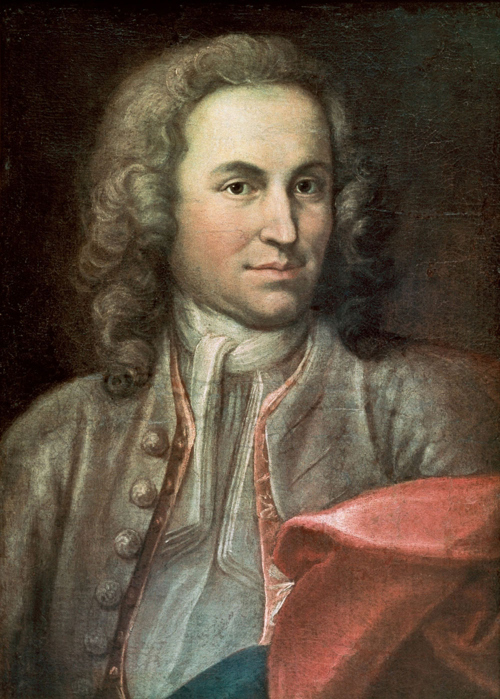
Pictures of Bach by Elias Gottlob Haussman, 1748.

Johann Sebastian Bach (1685-1750) born in Eisenach (in the modern-day Thuringia), Germany, in court chamber musician family. He was also known as organist. He wrote many famous sacred musics, organ, keyboards and orchestral works like the Well-Tempered Clavier, Brandenburg Concertos, etc. After his death, his music was old-fashioned and forgot together with the end of the Baroque Era until Felix Mendelssohn revived Bach's reputation.
About his personality, he was stubborn and strongly believed in the God (He was Lutheran), so he composed a lot of scared songs like cantatas, etc.
Bach's works is widely known by his brilliant melody, music style and techniques,so the works are influence to many musicians in further period, include Rock, Jazz and Pop musics.


This is young Bach picture by J. E. Rentsch, the Elder, 1715.

List of Bach's famous works:
- Brandenburg Concertos (BWV* 1046-1051), concertos Bach presented to Margrave** of Brandenburg.
- The Well-Tempered Clavier (BWV 846-893), contains 24 preludes and fugues.
- Toccata and Fugue in D minor (BWV 565), the most famous Bach's work.
- Coffee Cantata (BWV 211)
- Mass in B minor (BWV 232)
- The Art of Fugue (BWV 1080), an unfinished fugal work.

If you have any comment, please feel free to leave it on this blog.

* BWV - Bach-Werke-Verzeichnis - Bach Works Catalogue
**Margrave - a mediaval title of the military commander for maintaining the defense in the border provinces of the Holy Roman Empire. 

http://astore.amazon.com/classical-music-newbies-20

วันเสาร์ที่ 16 มีนาคม พ.ศ. 2556

Main Instruments in Orchestra-Brasswinds


Hello again! Here is an article about instruments in orchestra again. Now this one is about...

Brasswinds

1.Horn (Also known as corno and French horn) Very old valved brass instrument. It has this name because it evolved from animal horns, which human used in ancient time. It has a curve shape since 17th century and has valves since 1815. Trivia: Mozart wrote four notable horn concertos.


http://upload.wikimedia.org/wikipedia/commons/2/24/Britannica_Horn_Modern_Horn.png

2. Trumpet - Another very old valved instrument. It also used very often in military band, jazz music, etc.

http://upload.wikimedia.org/wikipedia/commons/thumb/7/73/Britannica_Trumpet_Proteano_Trumpet.png/256px-Britannica_Trumpet_Proteano_Trumpet.png

3. Trombone - Telescopic slide instrument, often used in jazz and military band, like trumpet.

http://upload.wikimedia.org/wikipedia/commons/thumb/9/94/Britannica_Trombone_Tenor.png/256px-Britannica_Trombone_Tenor.png

4. Tuba- A very big and deep-pitched instrument. The "Bass" of brass instrument.

http://upload.wikimedia.org/wikipedia/commons/thumb/6/6c/WIENER_TUBA_KAWAI_KFB-750L%28made_by_Musica%29.jpg/128px-WIENER_TUBA_KAWAI_KFB-750L%28made_by_Musica%29.jpg

5. Cornet- its shape is similar to trumpet but shorter shape and higher pitch.

http://www.wpclipart.com/music/instruments/other_horns/Cornet.jpg

6. Euphonium - a "Tenor" tuba. It sometimes is play instead of tuba. Mainly found in military band.

http://upload.wikimedia.org/wikipedia/commons/thumb/4/4a/Euphonium.jpg/128px-Euphonium.jpg

7. Flugelhorn - Another valved brasswind. Its sound is "fatter" and "darker" than trumpet and cornet.

http://www.wpclipart.com/music/instruments/other_horns/Flugelhorn.jpg

This kind of instruments are often used in military band.
This is all of this article. See you in next article.

Note: These pictures are public domain.